

When it comes to books on Abraham Lincoln, there are plenty to choose from. Over 15,000. It’s estimated more books have been written about Lincoln than any other historical person, except for Jesus Christ.
Over the past few summers, I’ve enjoyed immersing myself in one of the recent works on the 16th US President. Last summer I read, Abe: Abraham Lincoln in His Times by David Reynolds. This summer, And There was Light, by Pulitzer Prize winning historian, Jon Meacham.
Both books give close attention to Lincoln’s religious views and reflections. Admittedly, it’s difficult to be definitive on Lincoln’s personal faith. He was raised in a Baptist home and regularly read from the King James Bible. However, in his younger years, he expressed his significant doubts about several key biblical doctrines. As he grew older, and especially after the death of his young son Willie, Lincoln grew deeper and stronger in his faith in God. He attended the New York Avenue Presbyterian church in Washington DC, receiving spiritual counsel and comfort from its pastor, Phineas Gurley.
As the president of a country embroiled in a bloody civil war, Lincoln lived with unrelenting pressure. Daily, he faced decisions with life and death consequences. He was regularly criticized by journalists and civic leaders who considered him tardy and tepid in bringing about abolition. At the same time, others condemned him as a dictator who abused his presidential power.
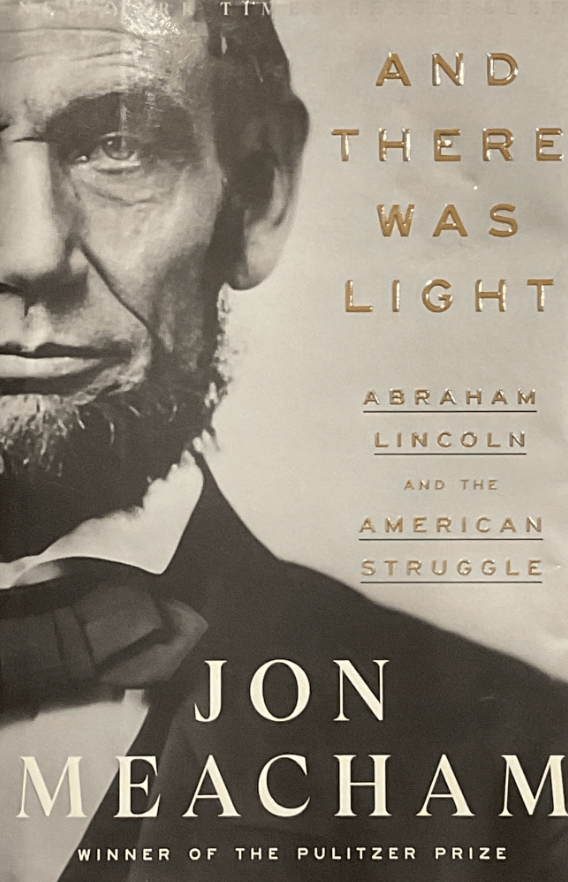
How Lincoln responded to the pressure and charted a path for the nation reveals an amazing depth of personal character, biblical understanding, and theological reflection.
As I’ve sought to learn from Lincoln’s life and leadership, I’ve come to admire him for three stellar qualities: Humility, Dependence, and Courage.
Humility before God
Lincoln took the issue of slavery seriously. He took preserving the Union seriously. But he resisted taking himself too seriously. He remained humble, admitting that all leaders are only “erring mortals”:
“The purposes of the Almighty are perfect, and must prevail, though we erring mortals may fail to accurately perceive them in advance. Meanwhile we must work earnestly in the best light He gives us.” (Meacham, 348)
To Senator Lot Morrill of Maine Lincoln confided, “I confess that I do not fully understand and foresee it all. But I am placed here where I am obliged, to the best of my poor ability, to deal with it.” (Meacham, 317)
After the defeat of the Confederate troops, Lincoln made a visit to Richmond, Virginia—the capital city of the Confederacy. He was greeted by a group of former slaves who came to thank him for their newfound freedom. When some bowed down before him, Lincoln said, “Don’t kneel to me. That is not right. You must kneel to God only and thank him for the liberty you will hereafter enjoy.” (Meacham, 385)
Dependence upon God
Throughout the long and weary Civil War, Lincoln actively sought guidance from God, regularly reading the Scriptures and requesting divine help.
During a discouraging phase of the war, when victories seemed elusive, Lincoln’s wife, Mary, asked him, “Any news?” “Yes,” he replied, “plenty of news, but no good news. It is dark, dark everywhere.” Then he took up a Bible and read for fifteen minutes. After he finished reading, his face brightened and he seemed lifted. When asked what book he had been reading, he indicated he’d been encouraged by reading the book of Job, the account of a man God tested through severe trials. (Meacham, 290).
His dependence on divine guidance was a subject he emphasized repeatedly. For example, after his re-election in 1864, he told Noah Brooks, “I should be the veriest shallow and self-conceited blockhead upon the footstool if, in my discharge of the duties which are put upon me in this place, I should hope to get along without the wisdom which comes from God and not from men” (Meacham, 353).
While he actively attempted to lead the nation forward, he depended on God to accomplish His greater purposes: In a private note, he wrote:
The will of God prevails. In great contests each party claims to act in accordance with the will of God. Both may be, and one must be wrong. God cannot be for, and against the same thing, at the same time. In the present civil war it is quite possible that God’s purpose is something different from the purpose of either party—and yet the human instrumentalities, working just as they do, are of the best adaptation to effect His purpose” (Meacham, 260).
Courage from God
While Lincoln was a politician who made politically shrewd moves as he sought re-election and worked to gain Congressional support for his Emancipation Proclamation, he consistently put principles before pure political pragmatism. When warned he would only be re-elected if he softened his stance on the abolition of slavery, he said, “We may be defeated; we may fail, but we will go down with our principles.” He added, “The world shall know that I will keep my faith to friends and enemies, come what will.” (Meacham, 337).
He was determined to know and follow God’s leading, no matter the cost. “It is my earnest desire to know the will of Providence in this matter. And if I can learn what it is I will do it.” (Meacham, 279)
As he concluded his Second Inaugural Address, he gave this stirring charge to a war-torn nation:
With malice toward none, with charity for all, with firmness in the right as God gives us to see the right, let us strive on to finish the work we are in to bind up the nation’s wounds, to care for him who shall have borne the battle and for his widow and his orphan ~ to do all which may achieve and cherish a just and lasting peace among ourselves and with all nations.(https://www.nps.gov/linc/learn/historyculture/lincoln-second-inaugural.htm)
Learning from Lincoln
Was Lincoln a perfect leader? He would quickly dispel that notion, acknowledging his faults and failures.
Was he an exemplary leader? His genuine humility, dependence on God, and convictional courage position him as a praiseworthy leader, arguably the greatest American president.
Could we use more leaders like Lincoln in government and church ministry? Most certainly. May God grant us more leaders who learn from the life and legacy of Abraham Lincoln.
 Rick and Linda Reed
Great summary of Lincoln and his Godly qualities. I still have fond memories of our Gettsburg visit and dinner together with our famalies.
John Kerr