
Recently, I (Rick) had the joy of teaching a group of pastors from over 25 countries. In one of the sessions, I spoke on the preacher’s closest ally. I made the case that, if a pastor is married, his closest ally should be his wife. The Bible teaches that the relationship between husband and wife is to be our closest, most enduring human relationship (see Genesis 1:27-28; Genesis 2:24; Ephesians 5:22-33).
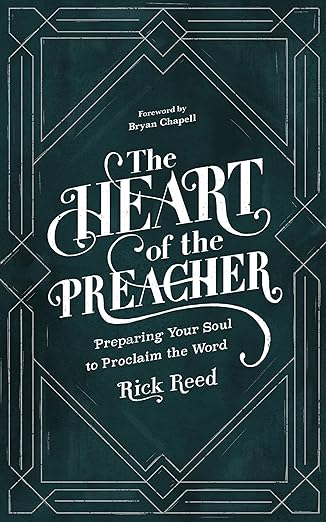
Much of what I said to the pastors came from a chapter entitled, Listen to Your Closest Ally, in The Heart of the Preacher. Here’s a reprint of that chapter.
King Solomon understood that an “excellent wife” was “far more precious than jewels” (Proverbs 31:10). Dietrich Bonhoeffer understood that too—even though he never married. When teaching his seminary students about preaching, he spoke of the priceless value of a wife’s sermon smarts: “The pastor has a right to know whether God’s word was audible in his sermons. … The task of the pastor’s wife is to perform this service. But the pastor must seek it! … Thank God if you have a wife who genuinely can criticize you!”[1]
Back in my seminary days, Don Sunukjian told us that after we’d served a church for five years, the only one who would be honest with us about our preaching was our wife. Sunukjian was right. After five years, the folks who can’t stand your preaching will be long gone. Most of the rest will have adjusted to you, appreciating your strengths and accepting your weaknesses. Not wanting to be hurtful—or thinking it’s useless anyway—they won’t be able or willing to give a constructive critique of your preaching. That’s why a wife who speaks the truth in love (Ephesians 4:15) proves so valuable for strengthening the hearts of those called to preach God’s Word.[2]
A Wife’s Perspective
What makes a wife’s perspective so valuable? Let me highlight three big reasons.
First, she sees life and hears sermons from a woman’s perspective. Your wife brings a viewpoint that reflects many other women, who generally comprise at least half the congregation. Her sensitivities will pick up on things men overlook or dismiss. Seeking her input on your sermons will make your sermons more balanced and believable—especially to the women in your congregation.
Second, she supports you more than anyone else. God gave you your wife as your closest ally. A godly wife possesses what G. K. Chesterton called “a strange and strong loyalty.”[3] She wants to see you excel and will defend you when others desert you. Her words of encouragement and affirmation will sustain you when others are silent or critical. If my wife, Linda, senses the sermon was a winner, I rejoice. Her approval is disproportionately important to me; I trust her opinion more than anyone else’s.
Third, she can keep you humble like no one else. Having lived with you, she has a realistic view of who you are. She can detect insincerity, hypocrisy, cowardice, pride, or exaggeration in your words better than anyone else (your kids are a close second). If you have nurtured a relationship of love and trust, she will keep you from thinking too highly of yourself.[4]
Asking for Input
How can you get the most profit from your wife’s honest feedback? Ask for it. I realize this seems rather obvious, but it’s often overlooked. If you want your wife to be part of your preaching ministry, invite her in. Tell her you value her views and will commit to prayerfully weighing whatever she tells you rather than prematurely dismissing it.
When it comes to asking for your wife’s honest feedback, I’d encourage you to ask for it both before and after your sermon.
Invite her input before you preach your message. This can take the form of talking through your sermon passage or having her read the draft of your manuscript. Ask her to point out any parts of the message that seem unclear or important aspects of the text you may be missing. Her comments will give you a sense of how the sermon will impact others in the congregation.
Make sure you ask early enough in the week to have time to make any needed changes. Ask her input while the sermonic cement is still wet, before it hardens into its final form. Don’t wait until Saturday night—or worse yet, the drive to church on Sunday morning.
Then, invite her input after you preach the message. But here’s an important qualifier: wait. That’s the advice Don Sunukjian gave us in his homiletics course. Sunukjian told us he asked his wife to wait until Thursday before giving him honest feedback on the previous Sunday’s sermon. If his wife critiqued him on Sunday or Monday, Sunukjian said he was still too emotionally vulnerable and likely to be overly defensive. By Thursday, he was focused on next Sunday’s message; last Sunday’s sermon was old news. By Thursday, he was able to hear her comments more dispassionately and respond to them more objectively.
Over the years, my wife and I have put this wise advice into practice. There have been Sundays when Linda was unusually quiet on our drive home. At times, I’ve probed to see what she was thinking: “How did you sense things went with my sermon today?” Sometimes she has responded by quietly saying, “I’m waiting until Thursday.”
When it comes to benefiting from your wife’s input on your preaching, one crucial factor will determine whether or not you benefit from her insights: you have to be willing to receive her comments without pouting or punishing. Being defensive or becoming offensive when she has words of critique will shut down the process in short order. Most wives are smart enough to discern when we are asking for evaluation but only want affirmation. So we must learn to silence our inner lawyer and absorb her words even if we don’t initially agree with her analysis.
Over the years, my wife has been my most consistent source of affirmation as a preacher. She’s also served as my most astute critic. For example, she has pointed out times when I did not adequately or accurately bring out a rebuke or warning from a passage I was preaching. She has voiced her concern that I can underemphasize biblical exhortations, letting people off too easy. While this critique has stung, it has been easier to accept coming from my most supportive listener. It’s also been echoed by some trusted colleagues who observed the same tendency in me. Listening carefully to her perceptions has helped me grow into a better preacher.
Not Laying Eggs
A married preacher who won’t listen to his wife’s compliments and critiques will be poorer for it. If you don’t listen to the feedback your wife whispers in private, you may eventually hear it spoken publicly from the rooftops. On the other hand, if you leverage the wisdom and insights of your wife, you and your congregation will be richer for it.
My favorite preacher story is about a pastor who discovered a shoebox underneath his bed. On the box his wife had written, “Please do not open.” Overcome with curiosity, he opened it anyway. Inside he found four eggs and multiple stacks of twenty-dollar bills. That night at dinner he confessed he’d found and opened the box. He could see she was disappointed and a bit embarrassed. So he asked her to explain. She replied, “Over the years, whenever you’ve preached a poor sermon—laid an egg—I put an egg in the box.” The pastor breathed a sigh of relief. “Well,” he said, “I’ve been preaching for thirty-five years. Four eggs isn’t too bad!” Then he asked, “But what was with all the money?” “Oh,” she answered, “whenever I got a dozen eggs I sold them.”
Preachers who listen to the honest input of their wives on Thursdays are much less likely to lay eggs on Sundays.
If what we hear on Thursdays can help us get ready for Sundays, so can what we do on Saturday nights. Making the most of Saturday night is another way we strengthen our souls to proclaim God’s Word.
[1] Dietrich Bonhoeffer, Theological Education at Finkenwalde: 1935–1937, ed. Victoria J. Barnett and Barbara Wojhoski, trans. Douglas W. Stott, vol. 14, Dietrich Bonhoeffer Works (Minneapolis: Fortress Press, 2013), 508–9.
[2] Throughout this chapter I refer to the preacher’s spouse as his “wife.” I realize not all preachers are married. I also affirm the glorious truth that God gifts both men and women to be effective teachers of his Word—I’m married to a woman who is a gifted Bible teacher. My study of Scripture has led me to embrace a complementarian position that maintains God calls godly men to serve as the preaching/teaching elders for Christ’s church (1 Timothy 2:11–12; 3:2; 5:17). I recognize sincere Christians have differing convictions on this matter. Since the role of “closest ally” can be filled by a wise, godly friend for unmarried preachers or by an honest, supportive husband for women who preach and teach God’s Word, the insights in this chapter can benefit all preachers.
[3] G. K. Chesterton, Orthodoxy (Glasgow: William Collins Sons & Co., 1908), 70.
[4] I realize that Christian wives, like their husbands, are not always “in step with the Spirit” (Galatians 5:25). Their observations and opinions are not infallible. For this reason, Scripture must stand over and above our spouse’s critiques or commendations.
 Rick and Linda Reed